
WhatsApp Image 2026-09-30 at 14.56.14

How to Become PMP Certified: A Practical Roadmap

For a long time, becoming PMP certified was one of those goals that lived somewhere in the future.I knew I wanted it, I talked about it, and I thought about what it would mean to become PMP certified, but wanting something and actually committing to the journey are two very different things.

Interestingly, my PMP journey started years before I even knew what project management was. 

Looking back now, I can see that the road to becoming PMP certified was never one straight line. It was a collection of experiences that eventually brought me to the exam room.

Remember why you started 

Somewhere around 2019/2020, I was simply the girl who loved planning things. I enjoyed planning hangouts with friends and family. I liked making sure everything came together. At the time, I didn’t think of any of this as project management. I just thought I was organised.

I didn’t realise that the same skills I was using to plan a hangout- coordinate people, think ahead, manage details were introducing me to something that would eventually become such an important part of my career.

In 2022, I came across the term project management, started learning about it, and saw myself in it and that was when I realised that I had actually been doing some of this already. That realization sent me in a new direction. I began volunteering with NGOs and taking on project manager and project coordinator roles. The more I did, the more I knew this wasn’t just something I could do; It was something I genuinely enjoyed.

That’s an important part of any big goal: remembering that the person you are today is standing on the shoulders of everything you’ve already done.

Build the Knowledge and take a chance 

As my experience grew, so did my interest in the PMP.

In January 2025, I enrolled in Dataleum‘s 5-week Project Management training. For me, this was another important part of the roadmap. I wasn’t just working towards an exam, I was deliberately investing in my understanding of project management and strengthening the knowledge I had already begun building.

I completed the training with excitement and I began to see the certification as more than just another qualification to add to my CV so  I  didn’t want to rush into the exam simply because I wanted the certification, I wanted to be ready. Due to this, I postponed the exam. Not because I didn’t care about it, but because I cared enough about what it represented to want to approach it properly. Looking back, I realise there is a very thin line between preparing well and waiting forever.

There will almost always be something else you could learn. Eventually, you have to decide that preparation has to lead somewhere.

Create a plan

Once I decided I was going to take the exam, I knew I couldn’t leave my preparation to chance, I needed a plan. Working while preparing for the PMP wasn’t easy. There were still deadlines at work. There were still responsibilities. There were still long days when studying was the last thing I wanted to do so I had to make the time.

I decided to create a study plan, and I set myself an ambitious target: Finish the entire PMBOK in two weeks. It sounds almost unreasonable when I say it now, but I did it. There were days when I had to push myself to sit down and study when I would have rather rested. But every time I wanted to put it off, I remembered why I had started.

Don’t wait until you have “free time”. Decide what matters, create the time and protect it.

Learn to Trust the Preparation

Even with the studying, the training and the experience, doubt still showed up. Thankfully, I wasn’t doing it alone. My supervisor and colleagues encouraged me throughout the journey. I had access to materials from my training, and I had built up enough experience to remind myself that I wasn’t starting from zero.

The difference between where I started and where I eventually found myself wasn’t that the exam had suddenly become easier. It was that I had changed, I had learnt more and grown more.

That was one of the biggest lessons of my PMP journey: Confidence doesn’t always come before action. Sometimes, confidence is what you build by taking action.

The Road will lead to the Exam Day

In May 2026, I finally sat for the PMP exam. When I became PMP certified, the biggest feeling wasn’t that I had suddenly become someone new. It was that I had taken something I’d been talking about for years and finally made it real. The PMP didn’t complete my project management journey, It became another milestone in it. I still have a lot to learn but I walked away with more confidence than I could have imagined.

That’s what I would tell anyone standing at the beginning of their own PMP journey:

Start learning, get practical experience, ask questions, find people who can guide you, create a plan. And when the moment comes, trust the preparation you’ve put in.

Your countdown can start now. 

Every PMP journey has a Day One. For her, it started years before she even knew what project management was. For you, it could start next month.

Dataleum’s next Project Management course starts next month, providing a structured opportunity to build your project management knowledge, develop practical skills and begin preparing for the path ahead. Eventually, every journey reaches the day you’ve been preparing for.

The question is: when will you start counting yours?

Credit goes to Adedolapo Ajibare for sharing her story


NETFLIX ANALYSIS

What Did We All Watch on Netflix in 2024?

You know how Netflix is always our go-to for a movie night, a lazy binge session, or even background noise while we work?

In the first half of 2024, Netflix gave us a diverse range of films and TV shows, many of which captivated millions of viewers globally. From action-packed blockbusters to thought-provoking limited series.

As the year comes to an end, we just had to do a report, by diving into the analytics behind Netflix’s most-watched titles and uncovering the viewing habits of its audience.

Let’s break it down!

Here are some insights we picked up from our analysis;

Hours Viewed vs. Views: What Do These Numbers Mean?

Netflix tracks engagement through two primary metrics:

  • Hours Viewed: The total number of hours a title has been streamed.
  • Views: The number of total hours watched divided by the runtime of the content.

For instance, Damsel and Lift topped the charts with 144 million and 108 million hours viewed, respectively. So, if you see something like 144 million hours for Damsel, just know it means A LOT of us couldn’t stop watching. But views? That’s where you find out who’s rewatching their faves like it’s a ritual.

Global Availability Matters

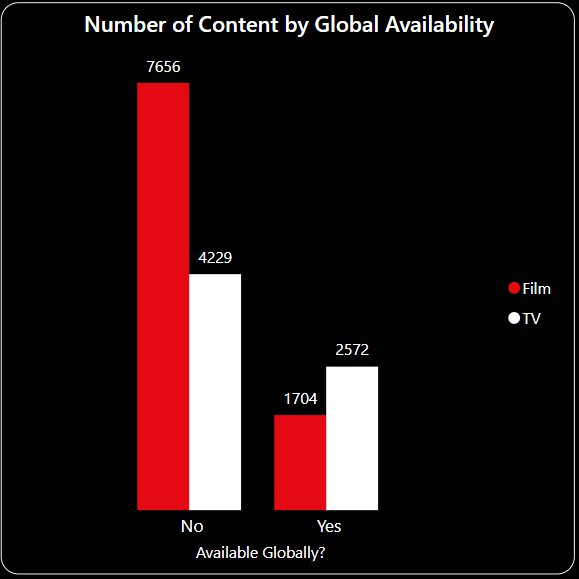
Out of 16,161 titles analyzed, nearly half (7,656) were available globally. Global availability directly impacts a title’s reach, especially in today’s interconnected world. Netflix’s ability to offer content across borders has significantly amplified the popularity of its offerings. It’s no surprise that the most-watched content was, globally available! When content crosses borders, it creates mega hits.


Top 20 Most Viewed Titles: What Are People Watching?

The year started strong with some standout performances. Among the most-viewed content:

  • Films to Remember: Damsel and Lift had us hooked, pulling in a massive 144 million and 108 million hours viewed, respectively. And let’s not forget The Super Mario Bros. Movie, which reminded us why we love a good adventure.
  • Limited Series FTW: Fool Me Once and Baby Reindeer brought the drama and thrills, proving that short but intense storytelling still rules.
  • Fan Favorites Return: Bridgerton: Season 3 had us swooning (again!), and Avatar: The Last Airbender made a jaw-dropping live-action debut.
  • Family Time, Anyone? Classics like Shrek, Minions, and The Boss Baby kept kids entertained while sneaking in laughs for adults too.

Which other shows and films stood out for you?

MORE INSIGHTS


Films vs. TV Shows: Who Wins?

It’s a close race:

  • Films dominated in quantity (9,360 titles), making sure we never run out of new releases.
  • TV Shows trailed slightly with 6,801 titles but boasted longer runtimes and higher overall engagement for series like The Gentlemen and Rebel Moon – Part Two: The Scargiver.

We Love a Good Franchise!

Big names carried big numbers. Franchise content continues to dominate Netflix’s charts:

  • Animated films like The Boss Baby and Despicable Me 3 prove that family-friendly content is always a win.
  • Sequels and spin-offs like Rebel Moon – Part Two and Bridgerton: Season 3 show just how valuable established fan bases are.

Check out the full report here and play around with the interactive dashboard!

So, What’s Next?

If the first half of 2024 was this good, imagine what’s coming next. Whether you’re team binge-all-at-once or team savor-every-episode, one thing’s for sure: Netflix is making sure we’re never bored. So grab your snacks! As we look forward to the rest of 2024, it’s exciting to see what new records Netflix’s content will break.

Let me know what you’re watching! 🍿

But what do you think? Are there any trends or stories that surprised you? Share your thoughts and join the conversation in the comments below!

Want to read more reports? Check out our Top Billionaires in Africa Blog post.

WhatsApp Image 2024-10-24 at 16.36.41

Richest People in the World: Forbes Billionaires 2024.

Each year, Forbes unveils its highly anticipated list of the world’s billionaires. This ranking doesn’t just highlight wealth—it reveals power, influence, and the shifting currents of global economics. The 2024 list continues this tradition, showcasing the top 20 individuals who stand out across various industries, innovations, and remarkable achievements.

The Forbes Billionaire list offers detailed profiles of these ultra-wealthy individuals, including their net worth, sources of wealth, and notable accomplishments. It covers a range of categories—from self-made entrepreneurs and inherited fortunes to tech giants. Updated regularly to reflect market changes and financial activities, the list gives us a snapshot of global wealth and the major players shaping the financial world.

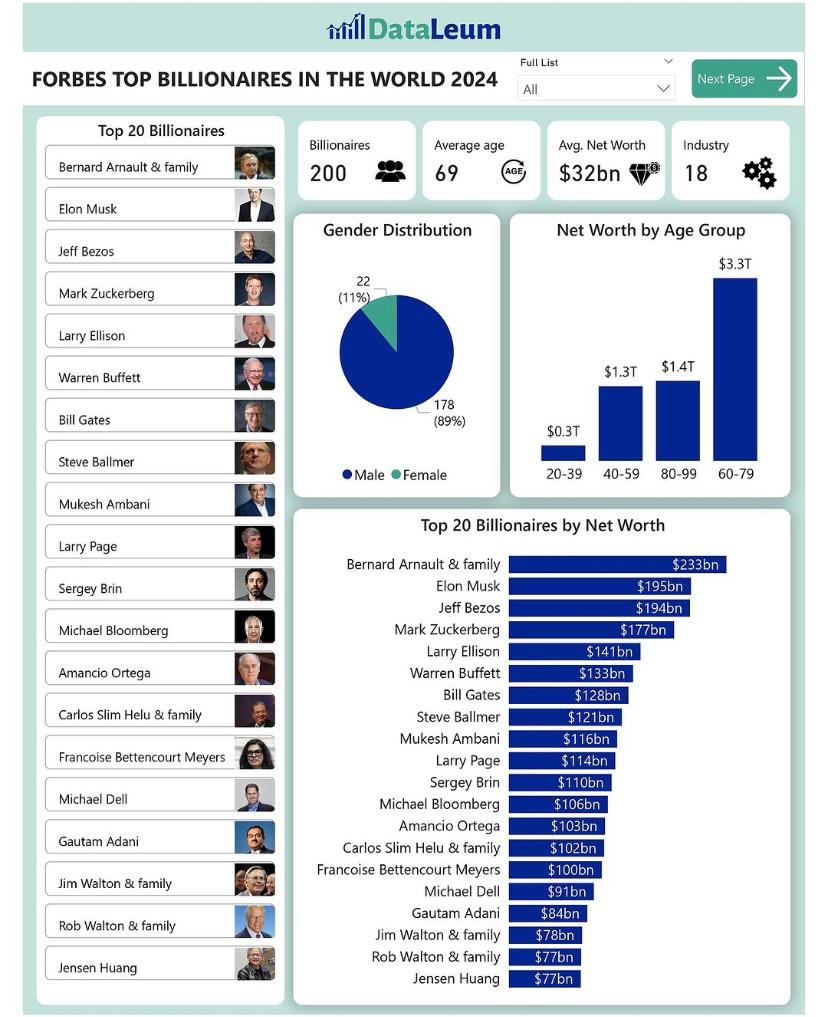
Inspired by the Forbes list, we created a detailed analysis to dive deeper into the world of billionaires. Our analysis examines not only the top 20 billionaires but also explores wealth distribution by age group, gender, and other relevant categories. By dissecting these elements, we aim to provide a more comprehensive understanding of global wealth trends and the diverse backgrounds of the individuals shaping today’s financial landscape.

Our analysis draws inspiration from these stories, aiming to show more insights into the dynamics of extreme wealth.

Forbes top billionaires in the world.

Here are some insights we picked up from our analysis;

1. Age and Wealth: A Generational Divide;

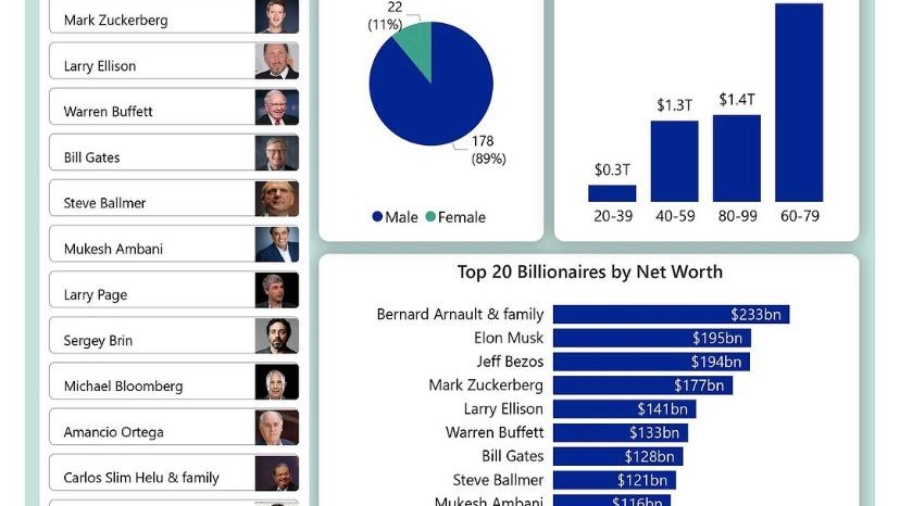
Examining billionaires by age reveals clear trends. The 60-79 age group holds the majority of global wealth, totaling a staggering $3.3 trillion. This age group represents the peak of wealth accumulation over a lifetime.

Next are the 80-99 year-olds, with a net worth of $1.4 trillion. Their wealth reflects the long-term success of early investments and effective family wealth management. The 40-59 age group, often at their peak earning years, have accumulated $1.3 trillion. Their wealth underscores their crucial role in generating and managing wealth.

2. The Role of Family Dynasties;

Family legacies play a major role in maintaining and growing vast fortunes. Among the top 20 billionaires, four prominent families stand out:

Bernard Arnault & Family: With a combined net worth of $233 billion, the Arnault family is a symbol of luxury and successful family businesses in fashion and retail.

Carlos Slim Helu & Family: The Slim family’s wealth totals $102 billion, highlighting their influence in telecommunications and investments.

Jim Walton & Family: At $78 billion, the Walton family’s wealth showcases Walmart’s retail empire’s lasting success.

Rob Walton & Family: With $77 billion, the Walton family benefits from Walmart’s growth and global reach.

These family dynasties highlight the power of long-standing business ventures and the importance of managing wealth across generations.

3. Gender Disparity: A Persistent Gap

Gender disparity remains a significant issue among the world’s billionaires. Of the 200 billionaires, only 22 are women, making up just 11% of the total. In the top 20, this gap is even wider, with only one female billionaire—Francoise Bettencourt Meyers. This imbalance underscores ongoing challenges in achieving equal opportunities for women in wealth creation and leadership.

While progress is being made, the path to closing this gap is still long and complex.

4. Comparing the Forbes Billionaires Lists: 2023 vs. 2024

It is intriguing to see how the world’s richest people have changed over the past year. Forbes’ billionaires list for 2023 and 2024 offers a fascinating snapshot of these shifts. Here’s a look at who stayed on top, who dropped off, and who made a new appearance.

-People Who Appeared in Both Years:

Several billionaires have managed to keep their place in the top ranks from 2023 to 2024:

Zhang Yiming: Founder of ByteDance maintains his position.

Bernard Arnault & Family: Chairman and CEO of LVMH, continues to lead as one of the wealthiest people globally.

Elon Musk: The CEO of Tesla and SpaceX remains a fixture at the top.

Jeff Bezos: Founder of Amazon stays strong in the rankings.

Bill Gates: The Microsoft co-founder holds his position.

Warren Buffett: The investment guru and CEO of Berkshire Hathaway remains prominent.

Larry Ellison: Co-founder and CTO of Oracle is still on the list.

Mark Zuckerberg: CEO of Meta Platforms retains his spot.

Larry Page: Co-founder of Google remains influential.

Sergey Brin: Also a co-founder of Google, continues to be among the top.

Mukesh Ambani: The chairman of Reliance Industries keeps his place.

Steve Ballmer: Former CEO of Microsoft is still included.

Jim Walton: Walmart heir and Arvest Bank chairman remains on` the list.

Alice Walton: Walmart heiress stays prominent.

Rob Walton: Another Walmart heir is still featured.

Françoise Bettencourt Meyers & Family: L’Oréal heiress continues to be in the top ranks.

Michael Bloomberg: The founder of Bloomberg LP is still on the list.

A few notable billionaires did not make the list in 2024. These include:

Sam Walton: The Walmart founder, whose descendants still feature, is no longer in the top 20.

S. Robson Walton: Another Walmart heir who was listed in 2023 but did not appear in 2024.

-New Faces in 2024

Several new billionaires have emerged in 2024 who weren’t on the 2023 list:

Carlos Slim Helú & Family: The Honorary Chairman of América Móvil joins the list this year.

Amancio Ortega: The founder of Inditex (Zara) makes a new appearance in the top 20.

The Forbes 2024 Billionaires List offers a fascinating glimpse into how wealth is shaped by age, family legacies, and gender.

But what do you think? Are there any trends or stories that surprised you? Share your thoughts and join the conversation in the comments below!Want to read more reports? Check out our Top Billionaires in Africa Blog post.

SUCCESS STORY

How Important Is Data Analytics To Banking And Asset Management?

In today’s fast-paced banking world, Data has emerged as a cornerstone in every decision-making process, particularly asset management.

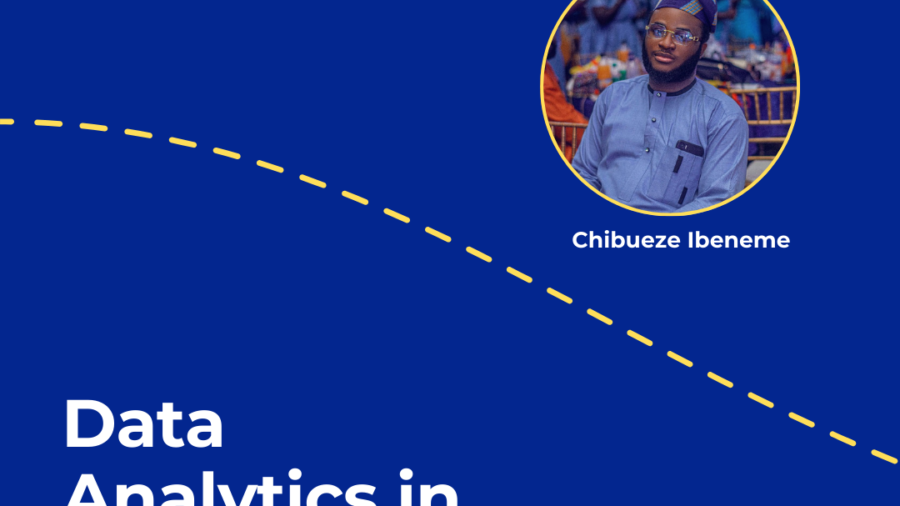
We sat down with Caleb Ibeneme, a seasoned banking professional in Remedial Asset Management at Access Bank PLC, to explore how Data Analytics has transformed his daily operations and the wider banking industry.

Q: Can you tell us a little about yourself and how you got into Remedial Asset Management?

Caleb: I’m Caleb Ibeneme. I began my banking journey in 2016 with Diamond Bank before its merger with Access Bank PLC. I’ve held various roles, including Team Lead in Customer Care, and now I’m part of the Remedial Asset Management Group at the Head Office. It’s been an exciting transition that has opened my eyes to the importance of Data Analytics in the financial sector.

Q: What do you enjoy most about working in banking?

Caleb: The best part of working in banking is the opportunity to build genuine connections. The banking profession exposes you to different individuals across various sectors, allowing you to learn from and interact with people at all levels of society.

Q: How have you seen the banking profession evolve over the years?

Caleb: The most notable evolution has been in the adoption of technology. Banks are constantly evolving to meet the demands of the digital world, especially in areas like Online Banking, Fintech, and, of course, Data Analytics.

Q: When did you first notice the growing importance of Data Analytics in asset management?

Caleb: Right from my first day in the Remedial Asset Management Group, it was clear that Data Analytics was essential. Our daily tasks involve managing large volumes of Data, and without Data Analytics, we wouldn’t be able to handle our KPIs effectively. So, I quickly realized the need to improve my skills in this area.

Q: How do you currently use Data in your day-to-day tasks?

Caleb: A lot of my work involves reporting. I prepare reports for my line manager and the bank’s senior management, including performance reports and various analytics. Data helps streamline these reports, making them clearer and more actionable.

Q: Can you share an example where data analytics helped solve a specific work challenge?

Caleb: One challenge we face is managing classified loan portfolios, which involves handling huge amounts of data. Thanks to the knowledge I gained from Dataleum’s training in Data Analytics, I’ve been able to simplify and visualize this bulky Data, making it easier for others to understand and act upon.

Q: What kind of tools or software do you rely on for your analytics?

Caleb: I mainly use Microsoft Excel, Power BI, and SQL for Data Analytics. These tools have been invaluable for organizing, analyzing, and visualizing the data I work with daily.

Q: How do you see data analytics shaping the future of banking and asset management?

Caleb: Data Analytics is not just shaping the future—it’s already here. Every aspect of banking, from customer onboarding to asset management, is driven by data. With millions of customers and assets growing daily, the need for robust data analytics will only increase.


Dataleum’s CIBN Accreditation: Paving the Way for Finance and Banking Professionals

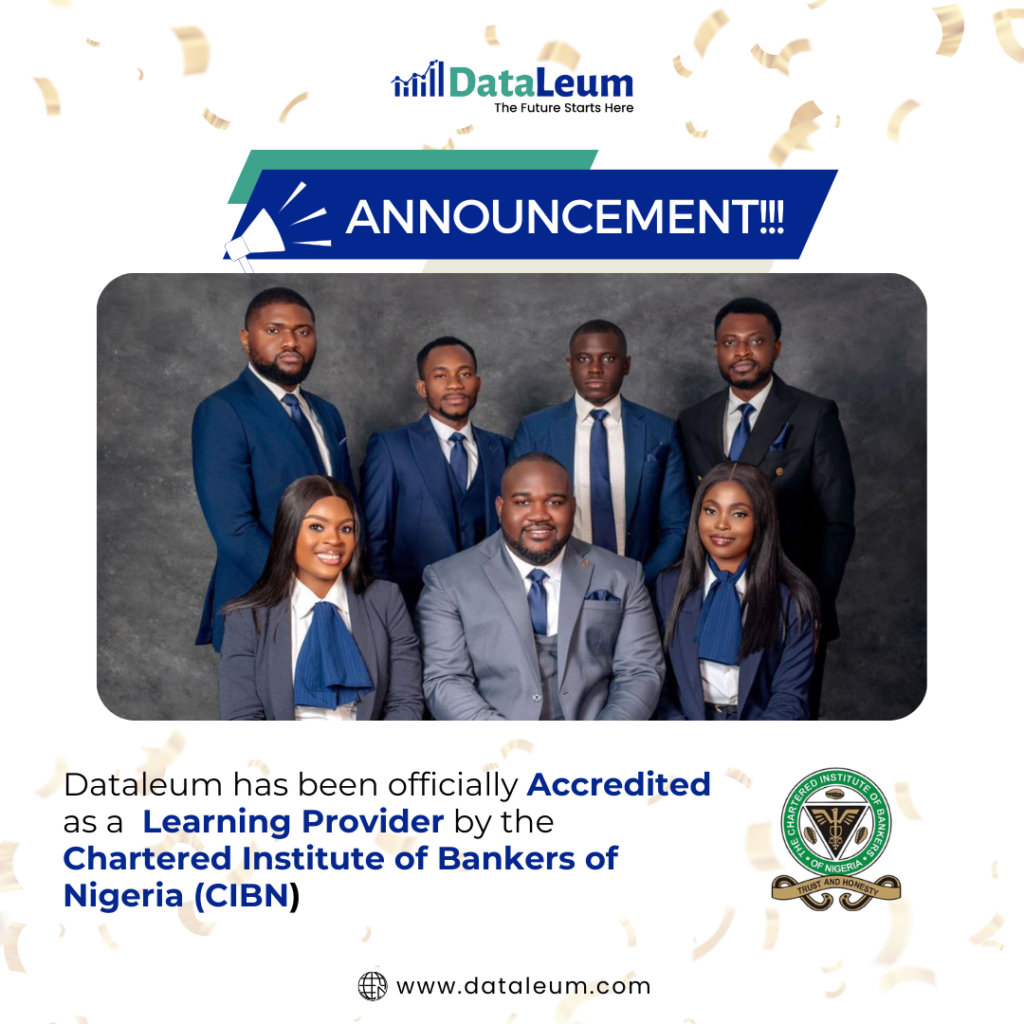
As Data continues to drive critical decision-making processes in the banking industry, institutions like Dataleum are playing a pivotal role in equipping professionals with the skills they need. We are proud to announce that Dataleum has recently been accredited by the Chartered Institute of Bankers of Nigeria (CIBN) as a certified training provider.

This prestigious accreditation allows us to offer specialized training programs tailored for professionals in the finance and banking sectors. Our Data Analytics courses, for instance, provide the foundational skills necessary to excel in roles like Caleb’s, where the ability to interpret and visualize large sets of data is crucial.

With the support of the CIBN, we are positioned to bridge the skills gap in the industry, ensuring that more professionals are well-equipped to meet the demands of a data-driven world.