
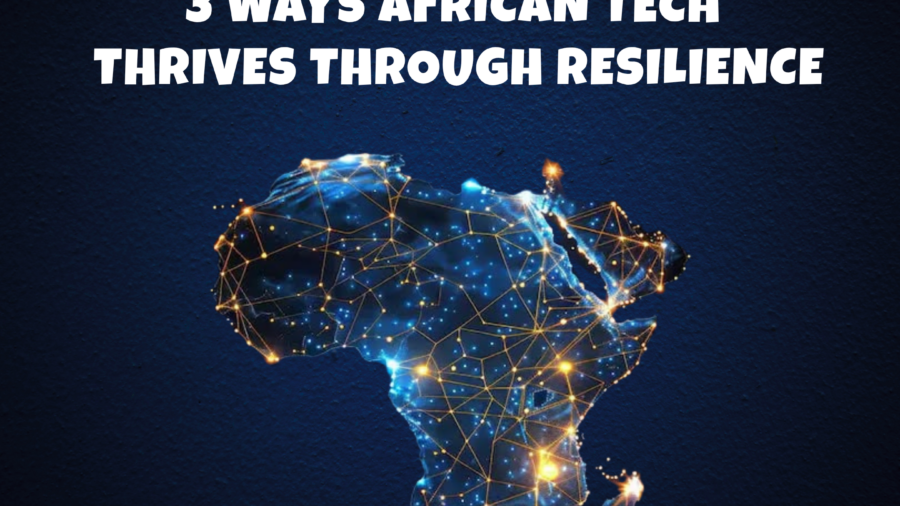
One thing’s for sure, Africa’s tech ecosystem was never built under perfect conditions. This, however, may be its greatest advantage.
African founders perfected continuity. In cities where the electricity supply is unstable, banking systems may exclude millions, and logistics networks remain fragmented. Startups, for example, learned early that survival depends on designing for unpredictability.
What many people call “African resilience” is not motivational language. It is an operational architecture. This year, as we celebrate Africa Day, that story deserves more than celebration, it deserves recognition.
Built for Chaos, Designed to Scale
African startups are often born into conditions that force innovation from day one. According to the World Bank, nearly 600 million Africans still lack access to electricity, thereby pushing businesses and households to rely heavily on backup energy systems and decentralized solutions. Instead of depending on one stable system, though, founders build multiple fallback layers into everything they do:
– Backup generators and solar systems for power outages
– Multiple payment rails, including bank transfers, USSD, cash agents, and mobile wallets
– Informal but scalable motorcycle delivery systems
– Community-driven support networks powered by WhatsApp groups, founder circles, and local partnerships
In African tech, redundancy is not inefficiency; rather, it is infrastructure.
This ability to adapt under pressure reflects something much bigger than business strategy. It reflects a continent that has consistently found ways to move forward despite limitations that would slow many others down.
Mobile Money: Innovation Born from Necessity
One of the best examples is mobile money.
Africa did not become the global leader in mobile payments simply because it wanted to imitate Western fintech models. It happened because traditional banking infrastructure left millions behind. GSMA states that Sub-Saharan Africa now accounts for more than half of the world’s mobile money accounts and processed over $1.1 trillion in mobile money transactions in 2024 alone.
For many Africans, mobile wallets became financial infrastructure long before debit cards ever did.
This necessity-driven innovation transformed companies like M-Pesa into global case studies. What started as a solution for underserved communities became a model studied around the world. Africa has repeatedly shown that when systems fail, Africans build new ones.
And perhaps that is Africa’s most hidden strength: A continent that has learned how to create momentum even when conditions are difficult.
The Rise of Informal Infrastructure
Perhaps one of the most underrated strengths in African tech is informal infrastructure.
In many Western economies, startups depend heavily on centralized systems. African businesses, however, often rely on decentralized systems that adapt more quickly under pressure.
Delivery companies, for example, use flexible motorcycle dispatch systems instead of rigid warehouse-heavy models. Small businesses coordinate inventory through messaging apps. What appears “informal” from the outside is often remarkably scalable in practice.
In fact, many of these innovations have deep historical roots. Across Africa, communities spent decades trying to create parallel systems to navigate unreliable public infrastructure- from cooperative savings groups to informal transit systems and open-air markets.
Final Thought
Africa Day is often a celebration of identity, culture, and independence. But it is also a reminder of something just as important: Africa’s ability to create pathways where few existed before.

Across various industries, African entrepreneurs continue to prove that innovation does not only emerge from abundance. Sometimes, it emerges from constraint.
Africa has been practicing adaptation for decades.
So perhaps the future may not only belong to the ecosystems with the most resources. It may also belong to the ones that learned how to thrive despite lacking them.
On Africa Day, that is worth celebrating.
Resilience, in Africa, is not the backup plan.
It is the engine.